Are your web site conversions low? Increase conversions with ClickTale

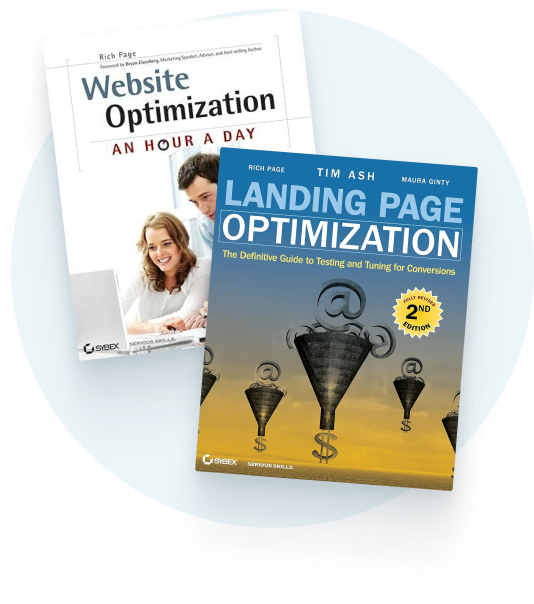
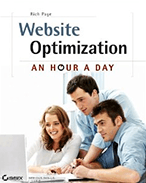
When you think of testing and conversion rate optimization, one of the first and greatest names that will probably spring to your mind is Bryan Eisenberg. His ‘Call to Action’ book that he wrote with his brother Jeffrey, was also one of the books that first got me into this field – so I was even more honored that he wrote the foreword of my new book, ‘Website Optimization: An Hour a Day’!

I recently managed to get some time out of Bryan’s crazy busy conference attending and consulting calendar to ask him a few questions. Let’s hear what he had to say:

Q: What’s keeping you at night at the moment (apart from your kids) – anymore books or exciting projects coming soon?

Magical big data applications for sales and marketing is what is occupying my time right now. I am working with Jeffrey, on a book on the topic, several keynote presentations and reviewing emerging solutions from vendors. And yes, my 3 kids keep me really busy right now too, even though it feels great having all three finally in school.

Q: Tell us about Runa, the new optimization tool you’re are an advisor for, and how can online marketers get most use out of it?

Runa is a new web tool that analyzes traffic to serve up real-time, big data-driven automated offers that are most likely to be accepted by the customer, while giving up the least, or no margin at all – in other words, increasing sales and revenue while focused in on margin optimization. Our research shows that when online retailers give away 10% of margin on site-wide offers they only receive an 8% lift in sales. With personalized offers using a tool like Runa you can give up less than 3% margin to see a 19% lift in sales.

Q: What is the biggest testing and optimization mistake you see your clients make, and how should they avoid it?

Not having a well developed test hypothesis is one of the biggest. Too many people do ad hoc testing and then wonder why there are no organizational learnings from their testing efforts. Every test costs real money and tool vendors aren’t likely to remind clients of that either.

Q: Testing is much more than using a good tool – to help succeed, what advice can you give for creating an organization that lives and breathes testing?

Develop the processes to involve and educate your whole organization on your testing efforts. Testing, optimization and experimentation are all qualities of a learning and adaptable organization. We all know that with the way the world of social, mobile and local have evolved the last few years, we need more adaptability.

Q: Who do enjoy following most on Twitter, and any up and coming website optimizers or online marketers you recommend to follow?

I have very diverse interests so I have created various private and public lists that contain the people I follow closely. There are several up and coming great people you should follow, many of them are my MarketMotive students like Noran El-Shinnawy, Naomi Niles and Theresa Baiocco.

Q: Website testing and conversion optimization is the new SEO if you ask me – do you have advice for anyone wanting to move into this exciting field?

I can recommend a quite few books to help you – see this list I put together a few years back for some great ones (plus ‘Website Optimization: An Hour a Day’ of course). To help you succeed, you also need to understand how website and conversion optimization interact with the multitude of marketing channels, and start experimenting by using some of the proven formulas like the Conversion Trinity that I developed.

Q: Give us a little glimpse into the future of testing and optimization – what do you think will be the most important things to test in 5 years?

Certainly mobile and social testing needs have been growing to really help improve those efforts. I think we’ll also continue to see screen technology evolve and testing needs change with it. Think how would you test layouts and content with augmented reality, etc. Google glasses any one?

So there we have it. Hope you enjoyed Bryan’s insights – if you have any follow up questions for him, please comment below. And a big thanks to Bryan for taking the time to answer these questions!


The world-wide-web as we know it is now over 15-years old, and in this time we’ve seen some amazing improvements to website design. However, there are still some terribly designed websites that look like they haven’t changed much during this time at all, or are really hard to use and interact with!

Help shame and raise awareness for these badly designed websites (to get them to improve!) in our new ‘Worst Website Design Contest’ and if you submit the winning entry, you will get great prizes to improve your very own website!

To enter, submit what you think is a badly designed website, and then vote on the worst from everyone’s submissions! The website submitted with the most votes at the end of the contest will win these fantastic prizes….

The Prizes for Winning Submission of Worst Website Design

The person who submits the winning worst website gets some fantastic services and products to use on their own website to improve it and convert even more visitors:

And big thanks go to the kind sponsors of these great prizes too!

How to Enter and Win the Contest

The contest is on the Facebook Fan Page for ‘Website Optimization: An Hour a Day’, where you also vote for the worst designed site and help decide the winner!

  • Visit the contest page and submit screenshots of the worst website design you have seen, with a comment explaining why you think it’s so bad.
  • Then get voting for your entry, and encourage others to vote for your entry (rules: one vote per day, per person).
  • Review and rate the other entries to help decide on the winning worst website.
  • The winner is the website entrant that has received the most votes at the closure of the contest on Friday 5th October 11.59PM EST.

Quick tips/rules on website submission entries:

  • The worst website doesn’t have to be the ugliest looking website – bad websites can look great, but have really poor usability.
  • It doesn’t have to be the homepage either. If you have found a particular badly designed or unusable product page or category page (or other page), then feel free to submit!
  • No offensive/explicit websites can be submitted (and will be instantly removed and disqualified if entered).
  • Lingscars.com website won’t count as an entry (because even though it looks really ugly, it converts really well!)
  • To encourage people to vote for your submissions and stand a better chance of winning, please use this Tweet:
    Tweet this: I just chose what I think is the worst designed website ever! Come enter and vote for me too: http://bit.ly/SkdsM3 #WorstWebsiteContest

So there we have the details – come enter the contest now!

Vote for Your Favorite Worst Website Design!

Don’t have any ideas of worst website designs to submit, but want to see some truly shockingly bad ones? Simply head over to the contest page, review the current entries and vote for the one you think is the worst! You, the readers, decide who wins the worst website design contest – not me!

And please help spread the word of this contest to your friends and colleagues… maybe one of your friends or co-workers thinks he is a hotshot designer but actually isn’t very good? This is the perfect way to shame them… (evil grin)

Enjoy the contest and good luck!

These days it’s not just all about generating as much traffic as possible to your website through SEO. Smart online marketers are realizing that to increase online revenue you need to optimize your visitor’s onsite experience and convert more of them for your goals, and not just your rankings in search engines. This focus on getting more visitors to convert for your website goals is known as conversion rate optimization, and if done well can have some amazing effects for your online revenue.

And yet conversion rate optimization is still not as common as internet marketing subjects like SEO, web analytics and usability. People just aren’t as aware of it. They don’t completely understand what it is or how it could benefit them or how they should use it. This article is meant to be the best guide you will ever need for conversion rate optimization, and to give you a great kick-start with your efforts.

What is conversion rate optimization?

Conversion rate optimization is the fine art of converting more visitors on your website for your goals, whether that’s increasing sales or signups, or increasing visitor engagement. It involves using web analytics tools to understand and monitor your conversion rates, and using website testing tools to test alternate versions of your website to see which versions convert visitors better. The ultimate goal of this testing is to increase your website conversion rates so that you generate more online revenue.

What is a conversion and when does it happen?

A conversion takes place when a visitor on your website completes a major goal of your website, for example purchasing a product or registering on your website. This conversion is tracked by your analytics tool (once you have added tracking for it), and is tracked in your testing tool.

This conversion will vary depending on your website type, and what your goals are for it. Here are some types of conversion for major website types:

  • Ecommerce website - a conversion occurs when an order has been completed by a visitor (e.g. order confirmation page).
  • Lead generation website – a conversion occurs when a signup has been completed by a visitor (e.g. thanks page).
  • Media website – a conversion is less defined here; when a visitor hits a high page views per visit or a signs up for a newsletter for example.

How is conversion rate calculated?

Basically, the higher the proportion of your website visitors that are converting for any of your website goals, the higher your website conversion rate will be. Your overall website conversion rate can be calculated fairly simply, using the following equation:

Overall Website Conversion Rate:
(Number of website conversions / number of website visitors) x 100

Example for ecommerce website conversion rate:
(Number of orders / number of website visitors) x 100

This overall conversion rate can easily be set up in all good web analytics tools (for example in Google Analytics for any of your site goals – see screenshot below) and can easily be setup in website testing tools too.

Are there more specific ways to measure website success?

While your overall website conversion rate is the most important measure of success for your website, it’s important to realize there are many more micro-level success measures (depending on your website type). These are called success-metrics and are great for diagnosing and improving more specific parts of your website other than your overall conversion rate. Here are some examples of good success metrics:

  • Shopping cart abandonment rate. This is the percentage of visitors who start but don’t complete your shopping cart flow.
  • Signup form completion rate. This is the percentage of visitors who visit your signup form page and complete it.
  • Page views per visit. This is the amount of pages that a visitor sees per visit, and is great for media websites in particular.
  • Homepage bounce rate. This is the percentage of visitors who arrive on your homepage and immediately leave it without seeing other pages.

Why do conversion rate optimization for your website?

Doing conversion rate optimization means generating much higher revenue from your website (if you do a good job with it!) To work out the great potential impact of increasing convertion rates, simply work out the likely extra conversions that will take place after testing new versions, and translate that into the additional revenue you will generate. This extra revenue will be music to your boss and your senior executives (and will help you build a case to do more website optimization too).

If you don’t do conversion rate optimization and only focus on driving more traffic to your website, you will be wasting much of your money because your visitors won’t be very engaged when they arrive, and won’t convert for your goals as often as you might want them to. It is also particularly important to do because your competitors may already be doing conversion rate optimization on their website, engaging and converting more visitors, tempting them away from your website (and tell your boss that to convince him you should be doing conversion rate optimization).

What tools do you need for conversion rate optimization?

To get started with conversion rate optimization, you need two key types of website tools in particular, plus some others:

  • A web analytics tool. This tool is essential because it helps you monitor your current website conversion rate and success metric performance, and to find poorly converting pages for testing. It will also help you gain great visitor insights to create better test ideas and help priortize which pages needs optimizing the most. A simple web analytics tool like Google Analytics needs to be setup and used for this.
  • A website testing tool. This tool is critical because you need to test different versions of your content (like different call-to-action buttons or different page layout) to see which version increases your conversion rates the most. A low-cost testing tool like Visual Website Optimizer is a great place to start, and here is a review of the main low-cost testing tool choices (and I suggest you don’t use Google Content Experiments because it’s very limited in its current new state). Expert testers should use advanced tools like Adobe Test&Target.

Ideally you also need a several other website tools to help you gain even greater insight from your visitors into how to increase conversion rates (usability tools like UserTesting.com and survey tools like SurveyMonkey). There are actually over 75 tools listed in my new book that can help you optimize and improve your website! 

What else you need for conversion rate optimization?

Conversion rate optimization isn’t as easy as you might think. You need more than just the tools – to be most effective with your conversion rate optimization efforts you need much more. Here are some of the main other vital ingredients for conversion rate optimization long term success:

  • Expert resources to help you create and run tests. If you have the tools, but don’t have expertise and resources to make best use of them you will be missing your true potential. Ideally you need to a web analyst to help you create test ideas, and then someone dedicated to creating and running your website tests. This will make it much easier to test quickly and efficiently the most impactful things on your conversion rates.
  • A great understanding of web usability best practices. Testing and optimizing these on your website will have a big impact on increasing your conversion rates – for example, making your navigation menus easy and intuitive to use, and using good options for sorting and filtering on browse pages. Using this website usability knowledge can make or break your website conversion rates, because your visitors will go to a competing website that is easier to use if yours isn’t.
  • Knowledge of persuasive online marketing techniques. These techniques will help you better engage, influence and convert your visitors. For example, you need to be able to write headlines that grab the attention of your visitors, and then write good call-to-actions that will quickly inspire them to take action and convert on your website.
  • Support and buy-in from the rest of your online business. Unless you are a one-man website, you won’t get very far with your conversion rate optimization efforts if you don’t have support and buy-in from key people in your organization, particularly from your boss and senior stakeholders. To do this, you need to educate them on the benefits of conversion rate optimization, and particularly the likely positive impact on revenue (and show them case studies and proof your competitors are testing).

What website elements have biggest impact on conversion rate optimization?

Unfortunately there is no silver bullet that will work every time. Depending on your type of website, your unique value proposition and your type of visitors, there are hundreds of website elements that contribute to increased conversion rates. However, here are some things to focus on that will often have a big impact and give you a good kick-start for increasing your conversion rates:

  • Your call-to-action buttons. These are found on most websites, from signup buttons to checkout buttons, and have a high impact on your conversion rates. To improve their effectiveness, test the wording, style, color, size and even the location of them on your pages (place them above the page fold so visitors can see them without having to scroll). Here are some good styles and wording for your inspiration:
  • Your headlines and important text. If your text doesn’t grab the attention of your visitors and intrigue them to read the rest of your content, then there will a greater chance of them leaving exiting from your website, lowering your conversion rates. Testing improving your headlines by keeping them simple, short and to the point, and try using wording that solves for visitors needs or asks them good questions. You should also test condensing long blocks of text, and try using bullet points instead (see example below) – these are far easier for visitors to scan and understand quicker, and often increases conversion rates.
  • Your shopping cart and checkout flow pages or signup registration flow pages. These are key because if your visitors struggle with these pages (regardless of how good their prior experience has been on your website), then they will abandon your website, lowering conversions and potential revenue. In particular you need to test making your forms simple to complete, remove non-mandatory fields, improve your error validation, and testing using risk-reducers like security seals, benefits of using your website, guarantees and shipping/returns offers.
  • Your home page and key entry pages. These are often referred to as your landing pages, and usually get the most traffic on your website, so often have the biggest impact on conversion rates. Making sure these are focused, uncluttered and solve for your visitors main needs will greatly improve your conversion rates. Using targeting for your tests on these pages to customize your visitors experience will meet their needs better and increase your conversion rates too.

For more details on these, and hundreds of other ideas to improve your conversion rates on many types of web pages, check out my new book.

What is a good conversion rate?

This is a very common question, and sorry to disappoint you, but there is no perfect answer. This is because its hugely dependent on many things, for example what constitutes conversion on your website, your unique value proposition, your marketing efforts, and the main types of visitors on your website.

Also, don’t go comparing your conversion rate to your competitors or what you may have read in a blog or a report – it’s risky because it may set you up for a fall or set incorrect expectations to your boss. For a rough benchmark though, 2% is about average for a overall website conversion rate and anything above 5% is generally considered very good. But to prove my point, it’s not unusual to have conversion rates above 50% for good, focused paid search lead generation landing pages.

Conversion rate optimization do’s and don’ts

To help improve and kick-start your efforts to optimize and increase your website conversion rates, here are some things to make sure you do, and some mistakes you need to ensure you don’t do.

Do’s:

  • Invest in using good testing tools and expert resources, as discussed earlier, otherwise you won’t succeed in the long run with your conversion rate optimization efforts. Consider outsourcing initially to a conversion rate optimization agency to give you a good kick start (for example SiteTuners, WiderFunnel or Adobe Digital).
  • Always iterate on your website tests and do follow up ones to improve your conversion rates even further. Don’t just simply test and optimize one thing and then move on to another completely different thing, as you will be missing out on huge potential for further conversion increases. Follow-up tests are often the best way to increase conversion rates.
  • Always set targets to try and beat for your conversion rate. A realistic target would be a 10-20% increase over your current conversion rate. As mentioned earlier, this is much better than trying to beat a conversion rate you may have read about in a report, or a competitor’s alleged conversion rate.
  • For an advanced way of increasing your conversion rates even further, use targeting in your tests to provide your visitors with more relevant content, for example target and show new visitors first time visitor benefits, and target and show repeat visitors content relating to their previous browsing patterns.

Don’ts:

  • Don’t just test and focus on what your boss says they want to improve on your website (known as a HiPPO – highest paid person’s opinion), as this often leads to suboptimal conversion rate improvements. Educate them on what will have highest impact – they often don’t know best for conversions – its your visitors that know what they want.
  • Don’t rush into picking winners of a test – you need to gain enough statistical significance for your test, usually at least 7 days worth of results. You will also need 100 conversions for each version you are testing, and to wait for any fluctuations to die down. If you rush, you may end up making a mistake by launching a version that isn’t actually the highest converting (and may even lower conversions!)
  • Don’t presume you know what tests or test variations will have the biggest impact on your conversion rates. Remember it’s your visitors who decide what version converts them best in your tests, not you or your boss. Gain your visitor’s opinion on what needs improving most using survey tools and usability tools, as this will often lead to much higher conversion rate results for your tests.
  • Don’t treat conversion rate optimization as a project, your online business should live and breath optimization and testing. It’s an ongoing process, just like SEO is. You should strive to always try to improve your conversion rates, and don’t just test once a year before your highest traffic periods.

Resources for deep diving into conversion rate optimization

To help you learn even more about this subject of conversion rate optimization, there are a number of great resources you should check out, from great blog posts to great training and courses. You will find these very useful!

Great conversion rate optimization articles:

Great conversion rate optimization case studies:

Conversion rate optimization books:

Conversion rate optimization training and courses:

So there we have it. The Ultimate Guide to Conversion Rate Optimization. Yes, there really are endless things to know and learn about the topic of conversion rate optimization. If you really want to know almost everything, you should consider buying my new book called ‘Website Optimization: An Hour a Day’ — it’s 360 pages long, and covers related topics like website testing, web usability and web analytics in much more detail – all you need to truly optimize your website and conversion rates!

Now its over to you – do you have your own favorite conversion rate optimization resources? Comment below and share so everyone else can learn!


My book, ‘Website Optimization: An Hour a Day’ has now been out 3 months – I thought it’s time that I reveal some things that you may not realize or know about it already!

  1. It’s not a book about SEO – its about website conversion and testing!
  2. The intro features ‘The Rise of Website Optimization: The Aftermath of The Dotcom Bubble Bursting’
  3. It already has 17 reviews on Amazon.com, averaging 4.5 stars out of 5!
  4. It features over 75 different tools to help test and optimize your website
  5. The great foreword is written by expert online marketing, Bryan Eisenberg
  6. It has sections on testing and optimizing your email campaigns too
  7. It’s great for anyone in web design, not just for those in online marketing, web analytics and testing
  8. It’s not just for retail websites – it covers all other major types of websites like media and lead gen
  9. Linda Bustos (fantastic author of Get Elastic blog) was the technical editor for it
  10. You don’t have to spend an hour a day reading it!

And the great news is that right now it’s on sale on Amazon.com – usually it’s $29.95, now it’s just $20.95! Have you got your copy yet?

« Newer Posts - Older Posts »